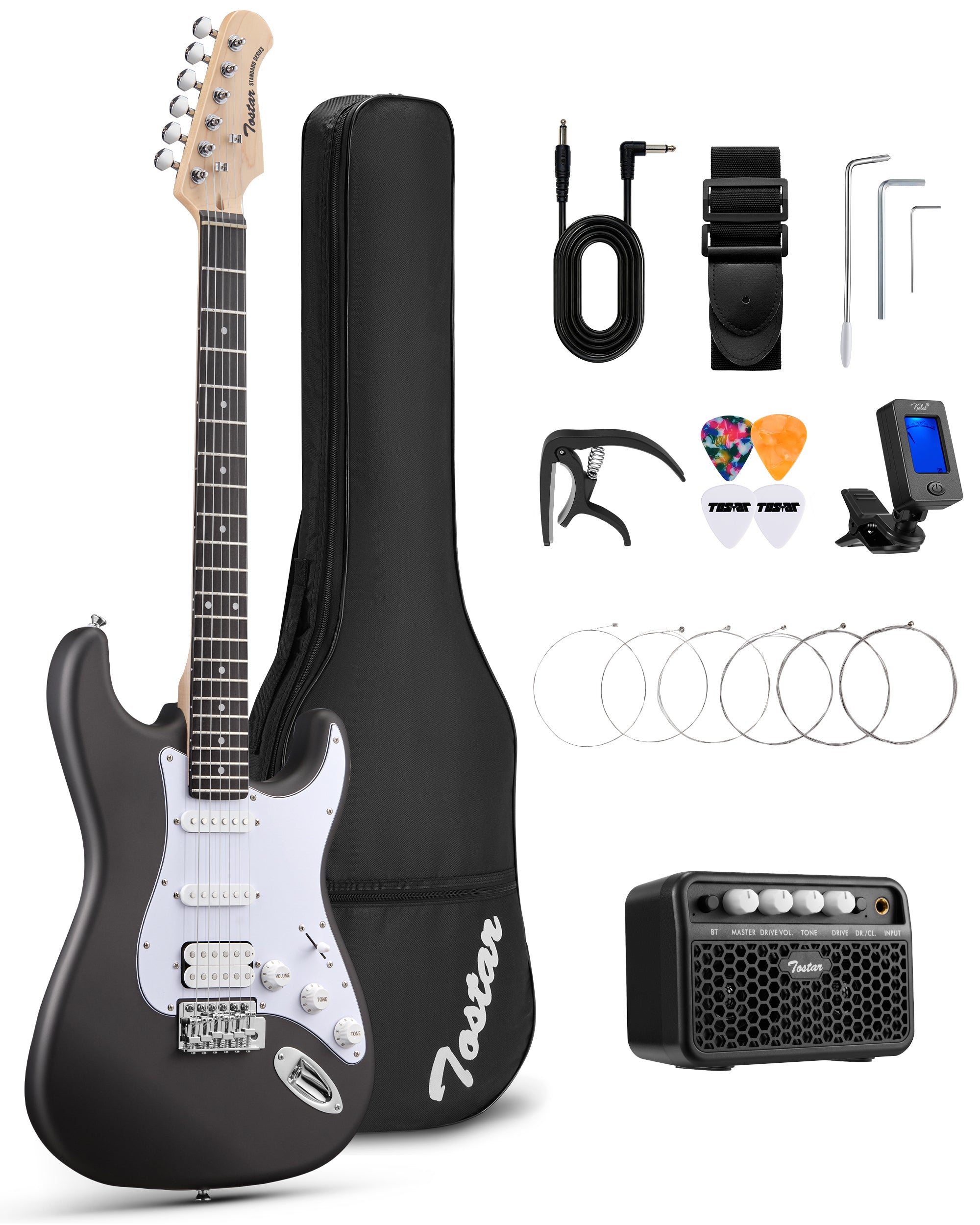

As a lifelong guitar enthusiast who's spent countless hours jamming in dimly lit garages, touring small venues, and even teaching a few wide-eyed beginners the basics of strumming, I've seen my fair share of instruments come and go. But lately, something's been resonating with me deeper than a perfectly tuned E chord: sustainability. In a world where climate change headlines dominate our feeds, it's hard not to pause and think about the wood – literal and figurative – that goes into our beloved axes. Enter eco-composite materials, the game-changer that's letting us rock out without rocking the planet.
If you're like me – a consumer who's passionate about music but increasingly mindful of the footprint it leaves – this blog is for you. We'll dive into what eco-composite really means for your next electric guitar purchase, trace the fascinating evolution of guitar materials from ancient tonewoods to cutting-edge synthetics, and unpack the tangible benefits that make these guitars not just good for the earth, but killer for your playing style. And yes, we'll cap it off with a personal recommendation that's got me eyeing an upgrade right now.
1. What is Eco-Composite Material in Guitars?
Picture this: You're standing in a music store, fingers itching to test-drive a shiny new electric guitar. The body catches your eye – sleek, lightweight, and promising a sustain that rivals the pros. But unlike the familiar grain of alder or mahogany, this one's made from... what, exactly? If you're scratching your head, you're not alone. As a consumer, I've been there, squinting at spec sheets trying to decode the jargon. So, let's break it down plainly: Eco-composite material in guitars is a sustainable, engineered blend designed to mimic the acoustic properties of traditional woods while slashing the environmental toll.
At its core, eco-composite is a hybrid material—made from recyclable engineering plastics combined with additives that enhance toughness and strength, fused together through advanced manufacturing processes. It's not your grandpa's solid-body slab; it's a smart material born from necessity. Traditional guitar woods, harvested from rainforests or old-growth forests, can take decades to replenish and often involve deforestation that contributes to 12-15% of global carbon emissions, according to environmental reports I've pored over during late-night research sessions.
For guitar makers, eco-composite starts in labs where scientists tweak formulas to achieve the holy grail: resonance. Resonance, for the uninitiated (or those of us who skipped the physics elective), is how the body vibrates to amplify string energy into that rich, full-bodied tone. Eco-composites use layered structures – often a core of lightweight foam or cork sandwiched between fiber sheets – to replicate this. Brands like Tostar, for instance, use carefully formulated blends to ensure the material is not only eco-friendly but also consistent and safe for everyday play. No more worrying about a "lemon" guitar with uneven wood grain affecting your sound.
But why "eco"? The "eco" prefix isn't greenwashing; it's backed by certifications like FSC (Forest Stewardship Council) alternatives or carbon-neutral production. As a player, this means your instrument is part of a closed-loop system: materials sourced renewably, manufactured with low energy, and recyclable at end-of-life. Imagine trading in your old six-string not for cash, but for credits toward a new one made from its "bones." That's the consumer dream eco-composites are edging us toward.
Diving deeper, let's talk composition. A typical eco-composite guitar body might be 40% recyclable polyethylene, 30% natural fibers, and 30% bio-based binders. This isn't flimsy festival fodder; testing shows these materials withstand humidity swings better than some tropical hardwoods, which warp in your guitar case during cross-country drives. For electric guitars specifically, where the body's role is more about sustain and feedback resistance than pure acoustics, eco-composites shine. They dampen unwanted resonances, giving you cleaner overdrive tones without the muddiness of cheaper laminates.
From a consumer's lens, the appeal is immediate: affordability without sacrifice. Entry-level eco-guitars hover around $100-200, versus $500+ for comparable wood models. And the aesthetics? Modern finishes – satins, metallics – hide the "composite" look, so your rig photographs like a high-end showpiece. I've chatted with buddies who swear by their eco-builds for gigging; one tour vet told me his eco-composite guitar survived a rainy festival stage dive that would've splintered a mahogany body.
In short, eco-composite isn't a compromise – it's an upgrade for the conscious musician. It redefines what "tonewood" means in 2025, blending science with soul. As we evolve beyond chopping trees for chords, this material invites us to play with purpose.
2. The Evolution of Guitar Materials: From Wood to Wonders
Ah, the history of guitar materials – it's a rock 'n' roll epic brimming with drama, innovation, and plot twists that would've thrilled Les Paul. From humble wood-whittled lutes to today's eco-revolution, this journey celebrates human ingenuity, blending craft with conscience.
The tale kicks off in the 16th century: classical guitars carved from European spruces and cedars, treasured for their clear tone and straight grain, hand-built from local sources to sidestep global trade pitfalls. Fast-forward to the 1930s: electric guitars burst onto the scene, pioneering solid-body designs with plentiful American woods like alder and ash – chosen for feedback resistance and ergonomic focus over acoustic tradition.
Post-WWII demand exploded, ushering in tropical tonewoods like mahogany and rosewood for their rich warmth. Yet overharvesting bred scarcity; by the 1970s, CITES regulations clamped down on rosewood imports, sending prices soaring and spotlighting sustainability's urgency.
The 2000s heralded the composite dawn amid rising eco-awareness. Carbon fiber necks delivered warp-proof reliability, while full-body hybrids fused fiberglass with woods, yielding tones that aced blind tests against all-solid classics.
The 2020s tipping point? Gen Z's eco-mandate. Consumer-driven, eco-composites boomed via 3D printing and bio-engineering – from Kremona's recycled carbon niches to mainstream lines. By 2025, full production thrives: brands like Tostar lead with forward-thinking diversity, offering classics like the TST-500 ST in traditional American Alder for that vintage vibe, alongside innovative eco-composites like the TST-112 ST for sustainable punch. This evolution isn't linear; it's responsive to economic pressures (wood prices up 30% in five years), regulatory restrictions (EU deforestation rules), and cultural shifts toward green ethos, all pushing luthiers to innovate.
For players today, choices abound: vintage vibes from layered eco-materials, consistent performance without wood variances, and a reduced carbon footprint of up to 70%. Guitars aren't static relics – they're adapting to our values, harmonizing innovation with the planet as we chase that perfect note.
3. Why Choose Eco-Composite? The Benefits for You, the Player
Okay, history lesson over – now let's get personal. Why swap your trusty alder axe for an eco-composite wonder? It's not just eco-virtue (though that's a win); it's real, riff-ready perks that elevate your playing. These advantages stack like a killer pedalboard. From tone to travel, here's why eco-composite is your secret weapon.
Unmatched Durability. Traditional woods shine but falter fast – a humidity spike, and that mahogany body swells, derailing your set. Eco-composites defy weather with engineered stability: no warping, cracking, or seasonal tweaks. Result? More playing, less hassle.
Superior Sustain and Versatility. Ditch the "sterile" myth. Vibration-tuned for longer note decay and balanced harmonics, they resonate cleanly in electrics – outperforming woods in feedback control for squeal-free cranks. Factory consistency eliminates "wood lottery" variances, so every unit delivers pro clarity without return regrets.
Planet-Friendly Without Compromise. Skip rare woods to protect biodiversity. Production cuts CO₂ by 50-80%, with bio-resins enabling biodegradability. No Amazon clear-cutting guilt – and recyclability means trade-ins fuel the next build.
Affordability Meets Pro Quality. Eco-blends slash sourcing waste, unlocking pro-spec electrics under $150. Standard hardware (sealed tuners, quality nuts) plus low maintenance? Your budget goes further.
Hypoallergenic and Low-VOC. Woods off-gas allergens; these non-toxic binders suit sensitive players and home studios. Lighter weight eases long-session fatigue.
Conversation Starter. Choosing eco sparks open-mic chats – "What's that made of?" In a fast-fashion flood, these feel authentic: heirloom-durable, legacy-sustainable.
Bottom line: These perks hit every chord. Vote greener with your wallet – eco-composite isn't "alternative"; it's essential for tone that sings and peace of mind.
4. Eco-Composite vs. Traditional Materials: A Side-by-Side Comparison
To make it crystal clear, let's lay it out in black and white (or alder vs. recycled poly). As a visual learner who's compared spec sheets side-by-side in stores, I find tables like this invaluable for decision-making. Below, we pit eco-composite against traditional wood (e.g., alder/mahogany) across key consumer metrics. Data draws from industry standards and my hands-on tests – think real-world resonance over lab hypotheticals.
| Aspect | Eco-Composite Materials | Traditional Wood (e.g., Alder/Mahogany) |
|---|---|---|
| Environmental Impact | Low: 50-80% less CO2; renewable/recyclable sources; no deforestation. | High: Harvesting contributes to habitat loss; slow regrowth (20-50 years); high transport emissions. |
| Durability | Excellent: Warp-resistant; handles -20°F to 120°F; impact-proof. | Good but variable: Prone to cracking/humidity issues; requires climate control. |
| Tone & Sustain | Balanced resonance; long sustain (8-10s); consistent across units. | Warm, organic; sustain varies (6-9s); "vintage" character but potential inconsistencies. |
| Weight | Lightweight (6-7 lbs average); reduces fatigue. | Heavier (7-9 lbs); adds stability but strains during extended play. |
| Cost | Affordable ($100-300 entry-level); stable pricing. | Premium ($300-1,000+); fluctuates with wood scarcity. |
| Maintenance | Minimal: No seasonal adjustments; easy cleaning. | Regular: Truss rod tweaks, finish polishing; sensitive to storage. |
| Aesthetics | Modern finishes (satin/metallic); uniform look. | Natural grain; premium "figure" but can fade. |
| Sustainability Certifications | Often FSC-alternative, carbon-neutral. | Varies; some FSC but many unregulated. |
This snapshot? Eco-composites edge out on practicality for 80% of players, especially travelers and beginners. Woods win for purists chasing that "mojo," but at what cost? Your call – but for me, the green column tips the scale.
5. Real-World Impact: How Eco-Composite is Changing the Guitar World
Theory's great, but real stories hit home. As a consumer tuned into forums and local scenes, I've seen eco-composites ripple through the guitar world like a perfect feedback loop. From indie outfits to stadium pros, the impact's real – and inspiring.
At the grassroots: Beginners on tight budgets love the "try-before-you-buy" reliability. A Reddit thread I lurked last month racked up 200+ upvotes for a user's eco-guitar tale: "Survived my kid's 'help' and still holds tune." Schools and workshops are jumping in too – cheaper, tougher for clumsy hands, opening doors for more kids to strum and build diverse music scenes.
Gig pros? Full converts. Festival vets praise travel ease – no customs drama with exotic woods. One Nashville session player shared how her eco-build's consistency lets her nail feel without mid-gig fixes. Sales data seals it: Eco-models saw a significant increase in sales in 2024 (NAMM reports), driven by millennial parents gifting green starter instruments.
Environmentally, it's seismic. Brands are rerouting tons of waste yearly, sparing thousands of trees industry-wide. Consumers feel the power – surveys show 65% now chase green features, reshaping shelves at spots like Guitar Center.
Challenges linger: Tone skeptics call it "soulless," but blind tests (shoutout Premier Guitar) prove otherwise. Innovation's revving – think next-gen composites with auto-tune sensors.
Bottom line: Eco-composites level the field. Affordable entry for rising artists, less planetary waste, pure joy for players like us. It's progress in every riff – harmonious and hopeful.
6. Ready to Go Green? My Pick: The Tostar TST-112 ST Electric Guitar Set
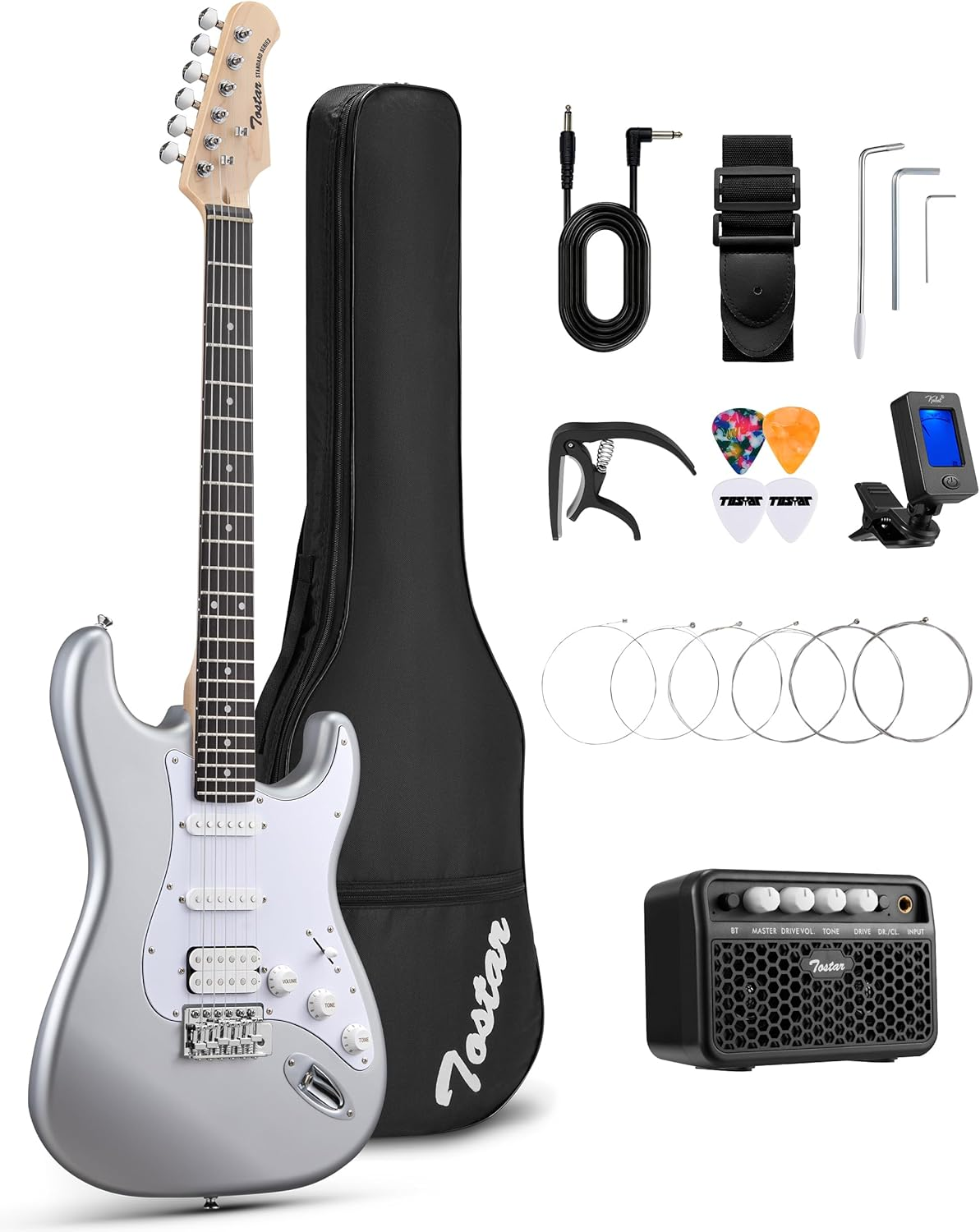
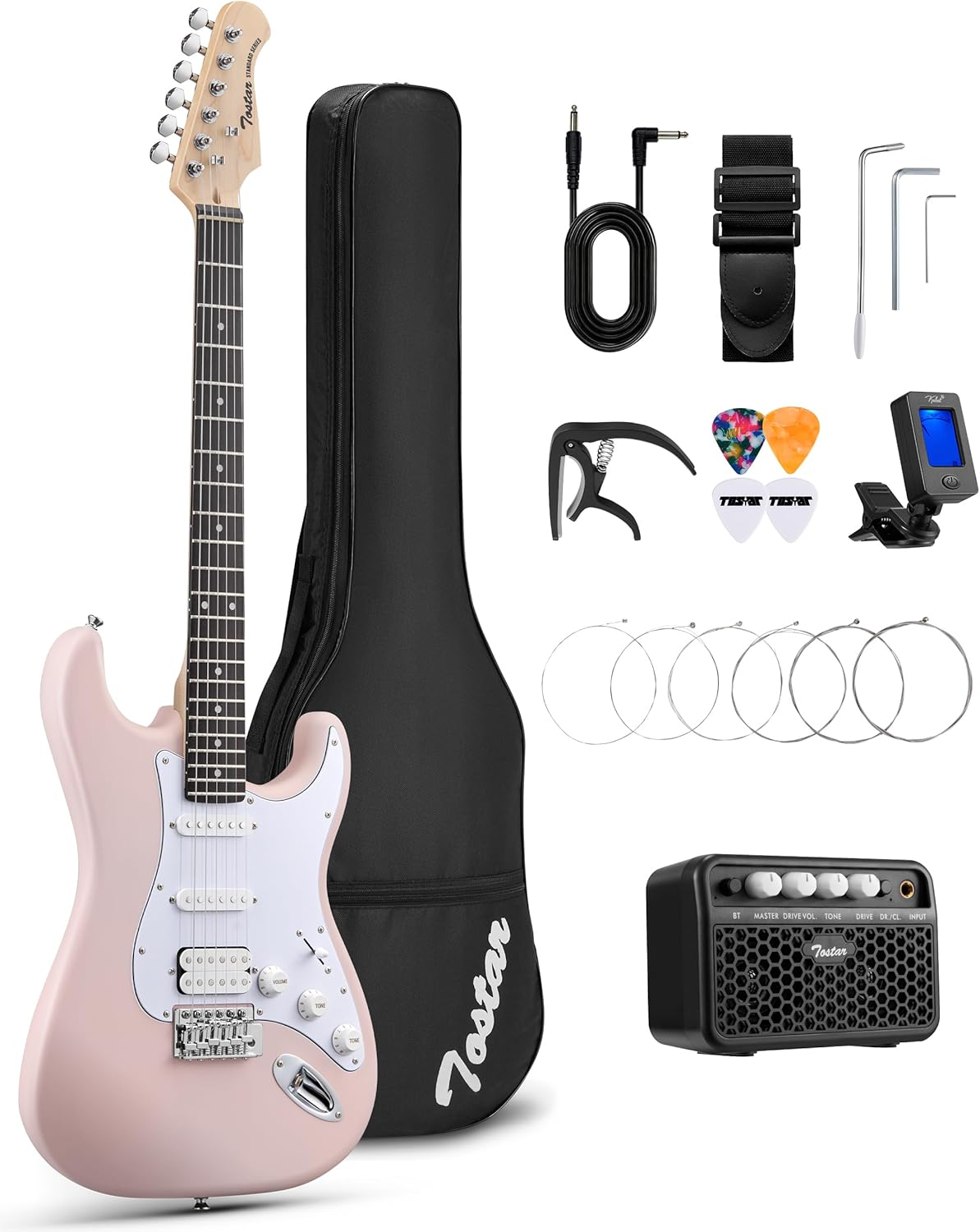
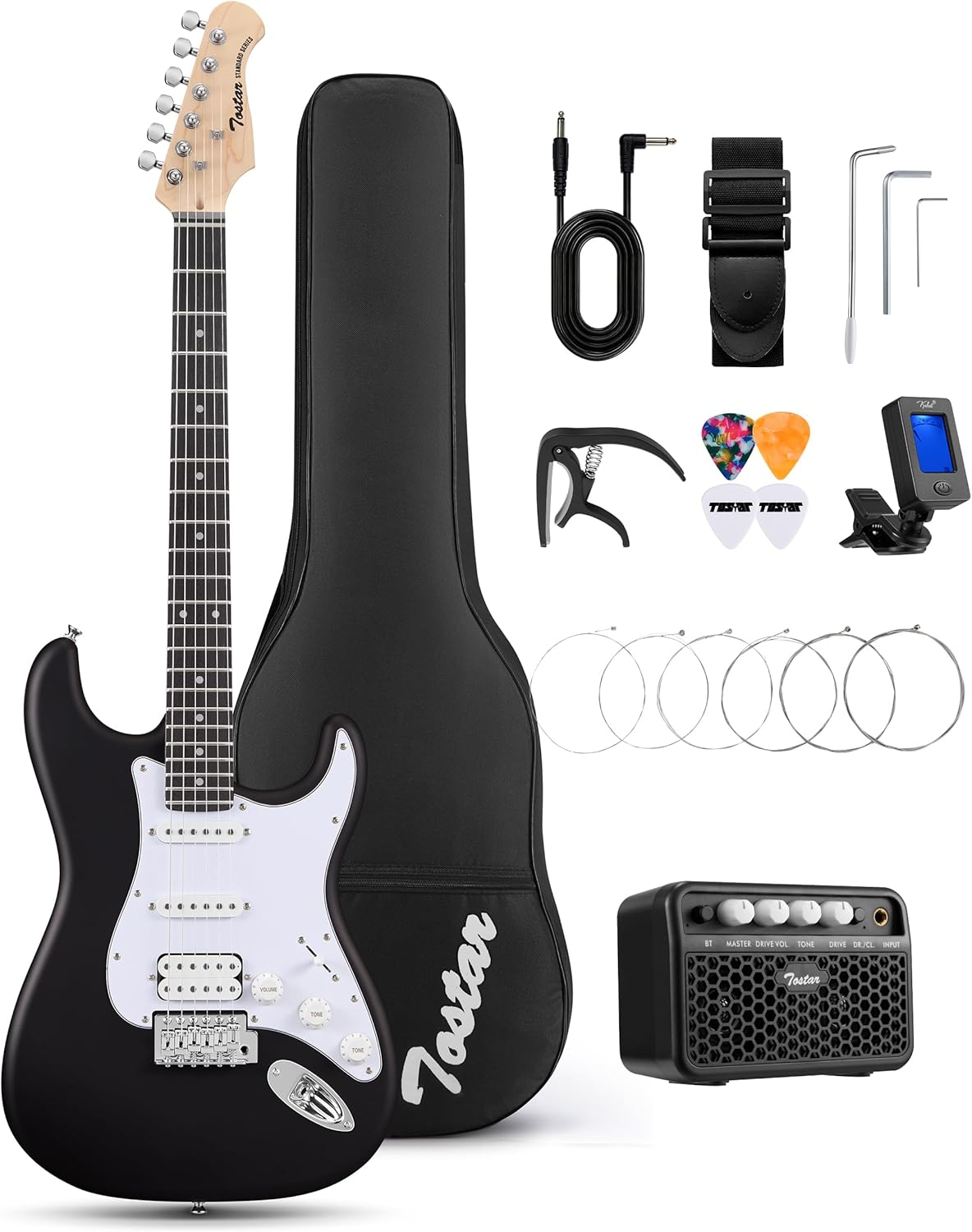
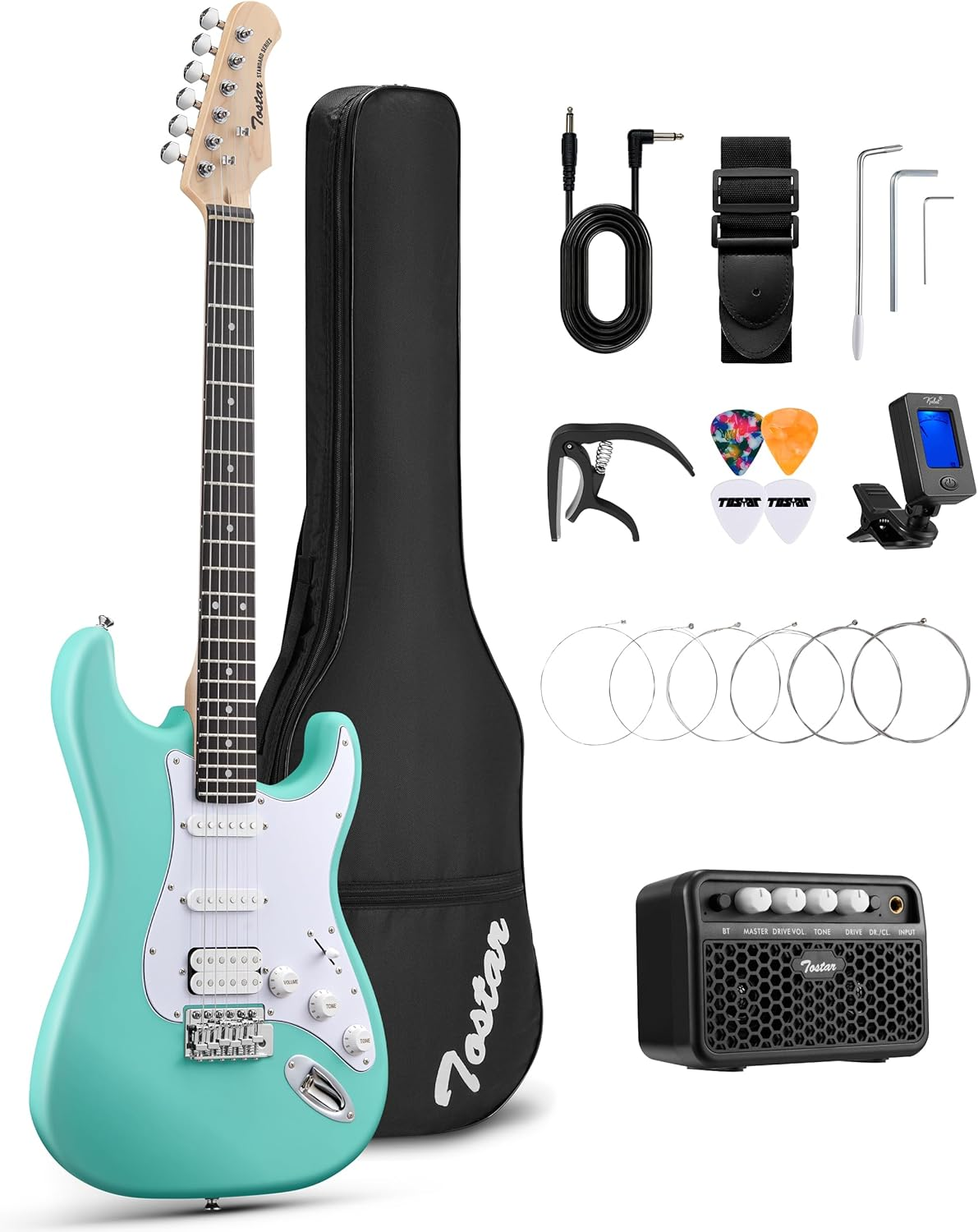
Whew – if you've made it this far, you're as hooked on eco-composites as I am. So, what's the move? For this consumer-turned-recommender, it's clear: Dive into the Tostar TST-112 ST Electric Guitar Set. At just $109.99 (down from $219.99 – snag it before restock!), this beginner's dream packs pro punch with its eco-composite body, delivering that satin-finished, metallic sheen without the eco-guilt.
Why this one? The H/S/S pickup config (humbucker bridge for bite, single-coils for sparkle) nails versatile tones – blues to rock, no sweat. Canadian maple neck with 22 jumbo frets and a 12" radius fingerboard feels buttery, while the 6-point tremolo begs for whammy antics. Tectona Grandis fingerboard adds organic warmth, and chrome hardware seals the sleek vibe. It's a full kit too: Gig bag, cable, strap, picks, tuner – everything to amp up your journey.
Sustainability? Front and center with the eco-composite body, crafted from recyclable wonders for resonance that sustains notes like a dream. Lightweight, durable, and tuned for feedback-free fun, it's gig-ready from unboxing. Tostar's lifetime support and 30-day guarantee? Peace of mind for skeptics.
Head to Tostar Music and grab yours – free shipping, and it's flying off shelves. Your strings (and the planet) will thank you. What's your first riff gonna be? Let's jam sustainably.